
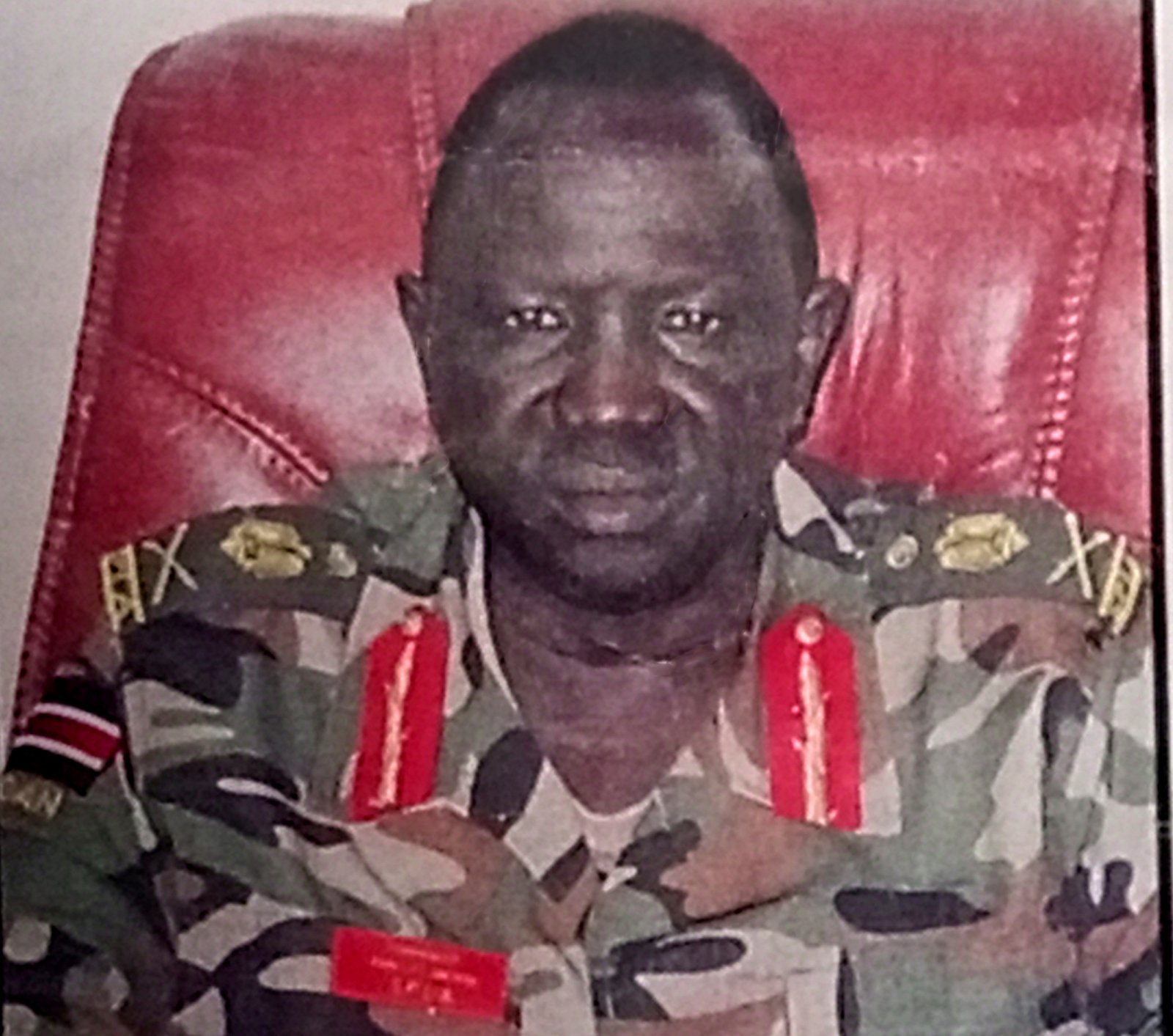
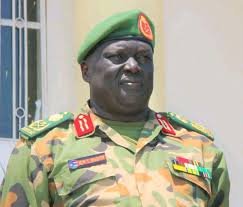
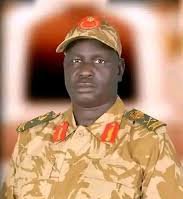
Commander : Ager Gum Akhol
Lakes Actions story
General / Eng : Mangok Mabok Marial
Lakes state veterans & Historical Leaders
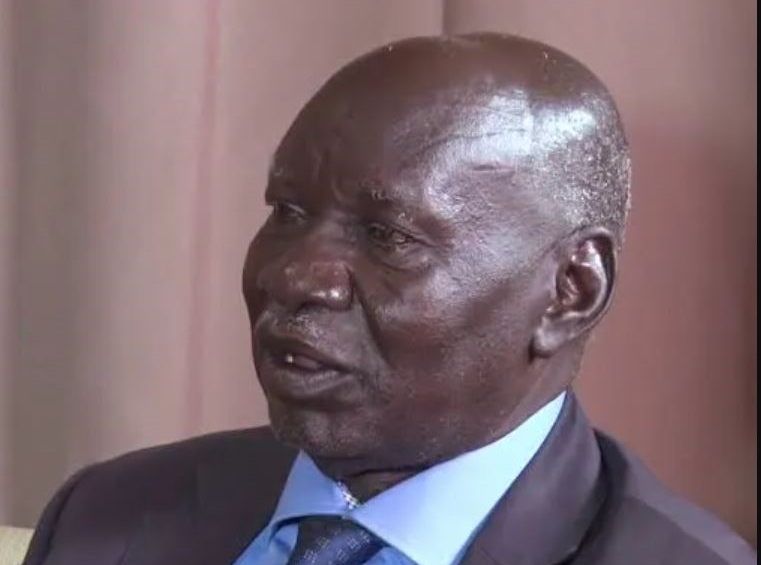
1- Gordon Muortat Mayen
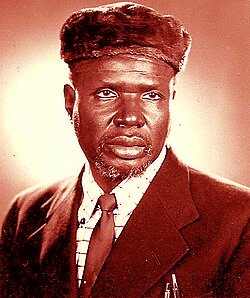
Gordon Muortat Mayen Maborjok (1922–2008) was a Sudanese revolutionary and politician and advocate for Southern Sudan’s independence. He was the President of the Nile Provisional Government (NPG) which led the Anyanya during the First Sudanese Civil War. Muortat also served as Vice-President of the Southern Front (SF) and Foreign Minister in the Southern Sudan Provisional Government (SSPG)..
Childhood life
Gordon Muortat Mayen was born in 1922 at Karagok village 10 miles South East of Rumbek. His father was a local chief of Patiop Clan of the Agar Dinka. Muortat was educated at Akot elementary from 1936 to 1942. He then attended Loka Nugent Junior Secondary School in Western Equatoria from 1942 to 1945. In 1951 he was among the first southern Sudanese to graduate from Sudan Police College and was commissioned as a police inspector where he rose through the ranks to become Chief Inspector of Police.
His live in politics
In 1957, Muortat was denied a transfer to southern Sudan, so he resigned his position and joined the Sudan Civil Administration. He was appointed assistant district commissioner and served throughout Bahr el-Ghazal and Upper Nile provinces. In 1965, under the transitional government of Prime Minister Sirr Al-Khatim Al-Khalifa, Muortat was appointed to be Minister of Works and Mineral Resources in his cabinet. However, when Prime Minister Muhammad Ahmad Mahgoub came to office, Muortat was dismissed.
In 1964, Gordon Muortat became one of the founders of the Southern Front (SF), a political party that would represent the rights of the people of southern Sudan. He headed the Southern Front delegation in the Round Table Conference between the north and south in 1965 and is remembered for demanding that the south be given the right to self-determination. He held this view due to the fact that southern Sudanese were not involved in the politics which led to the independence of Sudan from the colonial power in 1956. He therefore argued that southern Sudanese must be given the right to determine their political future in a referendum, to be carried out in the south which should be supervised and monitored internationally. This view was also shared by other members of the Southern Front, namely Clement Mboro, Bona Malwal and Hilary Paul Logali. The great massacres of Juba, Wau and all over the south that were carried out by the Sudanese Armed Forces in July 1965 convinced Gordon Muortat that the northern Arab rulers were not interested in the peaceful resolution of the ‘South Sudan Question’. Thus in August 1965 at the meeting of the Southern Front executive committee, he proposed that the party should be dissolved and that the entire committee should move into exile with the objective of merging with the Anyanya political and military wings.
Joining Anyanya One
uortat joined the Anyanya 1 insurgency, fighting in the First Sudanese Civil War to liberate the territories of Southern Sudan in 1967 and was appointed foreign minister in the Southern Sudan Provisional Government (SSPG) under Aggrey Jaden. After the collapse of the SSPG due to internal political wrangling, the second Anyanya government, the Nile Provisional Government (NPG) was formed. Gordon Muortat Mayen was elected unanimously as president, with his army fighting a fully-fledged war against the north, advocating for the complete independence of the south. During this time, Southern Sudan was renamed the Nile Republic with its citizens being referred to as Nileans. The name Southern Sudan was rejected by Muortat and his government due to the name being just a reference to a geographic zone which has little relevance to the people of the Southern Sudan. It is also a name which was used by colonial powers to inadequately describe the Nilotic and Nilo-Hamitic tribes living on the upper region of the river Nile, first by the Egyptians, and later by the British. Dr. John Garang de Mabior, future leader of the SPLA, was among the batches of Muortat’s soldiers sent to Israel for military training under the NPG.
The NPG was dissolved in 1970, after the failure to restore Israeli arms shipments to their forces. The weapons were instead being diverted to Joseph Lagu who formed the Southern Sudan Liberation Movement (SSLM) in January 1971 after staging a successful coup d’état against Muortat and his rebel government. At the time, Andrew Makur Thou, commander of the Anyanya forces under the NPG was willing to continue to fight under Muortat’s leadership and quell the coup attempt, however Gordon Muortat declined. In a 1999 interview, Muortat, talking on the dissolution of the NPG stated, “I went to the bush in order to fight for the liberation of the South Sudan. And since Lagu had managed to secure arms for the liberation of our people, I did not see any reason to continue with a parallel struggle. So I decided to stand down. Because it is my belief that South Sudan cannot be liberated from the Arabs unless all of the Africans in the South unite and fight as one people, for one goal, the independence of South Sudan”. He encouraged all loyal forces to join Lagu and continue the fight against the Arab dominated government in the North. While Muortat was leader of the Southern movement, he declined offers of ceasefire with Khartoum as he was not willing to accept the terms Gaafar Nimeiry was offering; local autonomy for the region of Southern Sudan. He was only willing to enter peace talks if the succession of Southern Sudan was on the agenda. Shortly after Joseph Lagu had taken over power as the leader of the movement, the SSLM under Lagu, entered peace negotiations with Khartoum to form the Addis Ababa Agreement which accepted regional autonomy for the South.
In 1971, Gordon Muortat was elected president of the African National Front, which was one of the southern factions that were against the Addis Ababa negotiations and did not actively participate in them, however they sent a clear message to negotiators on how proceedings could move. This included; that talks ought to be held between North and Southern true Representatives i.e. those mandated and not opportunists acting on complicity with the Arabs and their agents. Talks ought to take place without any pre-condition like the Arabs imposition of Local Autonomy. The talks ought to take place under the auspices of impartial organizations like the UN or the OAU. The Arabs must know that what they are now committing in Addis Ababa will never help in defeating the Southern Sudan. However, despite this, the Addis Ababa peace agreement was signed in 1972. Gordon Muortat did not agree with the contents and terms of the agreement, calling it a sell out and fraudulent. He believed that the Southern people were not given the chance to self-determination and a return to civil war will be needed in order for South Sudanese to achieve their true unalienable rights. He continued the protest against the agreement and remained in exile moving to the UK.
Agreement period 1972
During the period of peace after the 1972 agreement, the former Ayna-nya rebels were absorbed into the Sudanese army, however many were discontented, and some chose to return to the bush in 1975 and headed to Ethiopia. In 1975, Gordon Muortat along with the other Southern Sudanese politicians in exile, formed the Anyanya Patriotic Front, a liberation movement with the same aims as SSPG, NPG and the first Anyanya; to liberate the South as a separate country from the North. Muortat was elected as the President of the movement, other notable high-profile southern politicians that formed the APF were Elia Duang Arop; the movement’s Secretary General and former minister in the NPG, Francis Mayar Akoon, Agolong Chol and many others who had disapproved of the Addis Ababa Agreement. The Ethiopian government agreed to station the mutineers, which formed the military wing of the APF, in a camp called Bilpam, which later became the first full-fledged SPLA battalion in 1984. Gordon Muortat and his group went on to assist organising the few thousand strong, majority Nuer troops in Bilpam, amongst the troops were the Late Vincent Kuany Latjor, Pagan Amum and Deng Alor. Later on the Late Samuel Gai Tut also joined the rebellion. The Anya-nya Patriotic Front as Anyanya two, knowing that the movement was the continuation of the first Anya-nya one movement. However, Muortat denounced the splinter group that went on to fight with the SPLA that also became known as Anyanya II because they deviated from the original ideals of the APF. The new movement, the APF was confronted with many difficulties, launched as a genuine separatist movement to liberate the South Sudan and establish an independent African State, Muortat and the politicians heading it were not ready to entertain any ambiguous directives from their hosts and get dragged into the Communist demagoguery. As a result, the Ethiopian government dismissed them in refusing to provide financial and logistical support. The lack of financial and logistical support, as it was not forthcoming from anywhere, eventually led to their dissolution. Gordon Muortat however, had opened up a line requesting arms from Col. Muammar Ghaddafi’s Libya. Due to Libya’s fractured relations with the Khartoum government, they were willing to assist. The arms were pledged to the movement in Southern Sudan and Muortat gave his blessing for the SPLA, who later took up arms against Khartoum, to make good on this offer.
As Muortat had predicted the Addis-Ababa agreement did not live long. Resource infringements and marginalization of the South by the North led to increased unrest in the South. In 1983 President Gaafar Nimeiry declared all Sudan an Islamic state under Shari’a law, including the non-Islamic majority southern region, forcing southerners once again to take to the bush for the second struggle for the liberation of the Sudan, this time under Late Dr. John Garang.
Gordon Muortat’s leadership and resolve were the driving force that continued armed liberation revival in Southern Sudan. Also inspiring many other South Sudanese politicians and students’ organizations involved in the liberation struggle, notably the SOSSA and NAM.Despite his lengthy period of exile in Europe, Gordon Muortat remained an influential figure in South Sudanese politics. As a revered figure, his residence in London served as the Mecca for many South Sudanese political leaders of various political stripes and viewpoints in the 1980s and 1990s.
In 1994 Gordon Muortat was appointed as Personal Advisor to the SPLM/SPLA Chairman Dr. John Garang de Mabior and a member of the National Liberation Council. He participated in the Machakos peace talks in Kenya in 2004 with the government of Sudan. At the talks he insistently warned the SPLM delegates to learn from the experience of the Addis Ababa Agreement in 1972.
Later life and death of Gordon Mortat
From 2006 and onwards, Muortat became an MP in the South Sudan Legislative Council representing his constituency in Rumbek. In his inaugural speech to the SSLA he reiterated his concerns about the length of the CPA and on tribalism. On 12 April 2008, Muortat died from natural causes while on a recess from parliament-having achieved so much in his life. He was very proud of the SPLA/M achievements especially that the road to the realization of the Southerner’s freedom was within sight. Gordon Muortat was given a state funeral and was laid to rest at Rumbek Freedom Square, attended by thousands of citizens who had come to pay their last respects to a man who was remembered by many as a freedom fighter and defender of the rights of the people of South Sudan. Notable speakers at the occasion were President Salva Kiir Mayardit, Abel Alier; former Vice President of the Republic of Sudan and President of the defunct High Executive Council for Southern Sudan, Isaiah Kulang Mabor, Madam Rebecca Nyandeng De Mabior, Mr. Andrew Makur Thou, Mr. Bona Malual, Mr. Clement Wani Konga and Mr. Daniel Awet Akot, then governor of Lakes State. In his address to the mourning citizens of the South Sudanese town of Rumbek, the President of the Republic of South Sudan, Gen. Salva Kiir Mayardit, reminded the people of the selfless leader, who spent all his life struggling for the cause of the people of South Sudan. “It is now up to us, the present generation to transform Hon. Gordon’s dreams into a reality, after achieving the Comprehensive Peace Agreement where the right to Self Determination for the people of South Sudan is enshrined,” stated the President. President Kiir declared 3 days of state mourning and all the flags in Lakes State fly at half-mast.
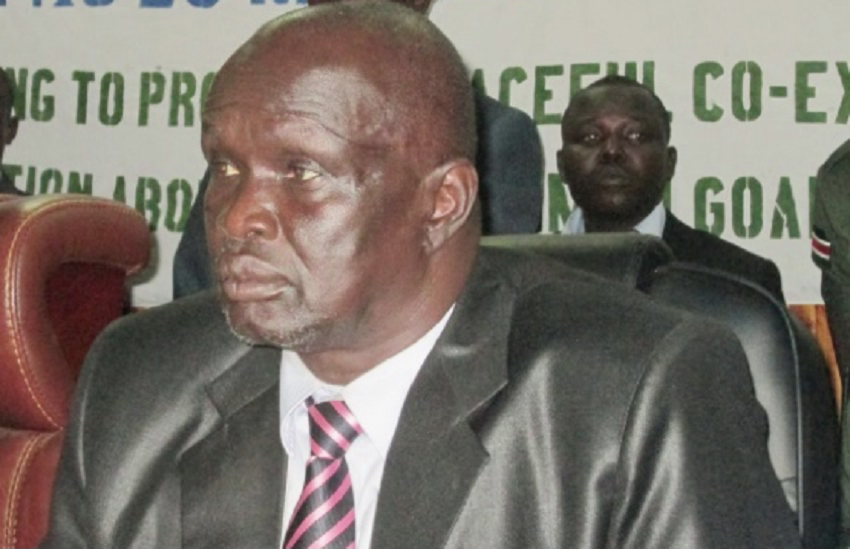
2- Malath Joseph Lueth
Childhood life
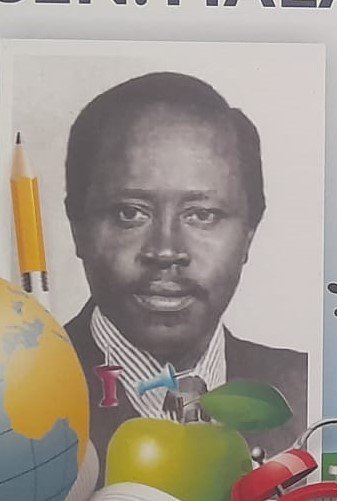
Honorable and beloved senator Malath Joseph Lueth was born in Akot south Sudanese of Rumbek town in south Sudan in 1940. The oldest child of Mr Josph Lueth Kolnyin and Madam Akec Dak Malek,
Sen.Malath took an early intrest in education.
He Attended Rumbek primary school from 1949 and joined Mundri intermediate school in 1953 and later on went to Juba commercial secondary school from to 1962. Due to instability in south Sudan as a result of the first Sudanese Civil War (1955- 1972), Sen. Malath into exile in neighboring countries ((Uganda, Kenya and Ethiopia) from 1962-1968) with an aspiration to help his people and attain higher education.
Sen Malath enrolled at Haile Selassie University (now is Addis Ababa University) in Ethiopia, and graduate with Bachelor of Science in Economics in 1971.
A staunch Advocate for south Sudan independence.
His live in politics
Sen. Malath went into Politics in 1973 following the end of the war with the signing of AdiS Ababa agreement. Sen. Malth aimed to use his political position to focus on issues relating to decreasing illiteracy rates, combating poverty as well as healthcare problems.
Sen .Malath was democratically elected by the Rumbek community after defeating 7 opponents to win the senate seat to represent Rumbek constituency in regional of south Sudan in Juba.
Sen. Math was elected for a second term in 1982 .however .this was cut short with the eruption of second Sudanese civil war in May 1983.
Like many of his colleagues, Sen. Malath joined SPLA (south people’s Liberation Army) and undertook his military training in Bonga, Ethiopia, Graduating from shell 3 with the rank of a captain. Sen. Malath was instrumental in ensuring his former Ethiopian classmates who were now part of the Ethiopian government help the SPLA during the war in 1984, Sen Malath was appointed the SPLA spokesperson in Ethiopia. He started reported SPLA affairs in SPLA Radio and thus informing southerners of the reasons for the conflict between south and North Sudan .in addition, Sen Math was deployed to work in various refugees comp across south Sudan and in Ethiopia on behave of the SPLA.
Later life and death of Malath Johsaph Lueth
In 1992 Sen Malath passed away His untimely death has left a void in the lives and hearts of many people is remembered as a son and hero of the people of Lakes State and south Sudan A freedom fighter who fought for the liberation of south Sudan.
3- John Lat Makoi Zechariah
Childhood life
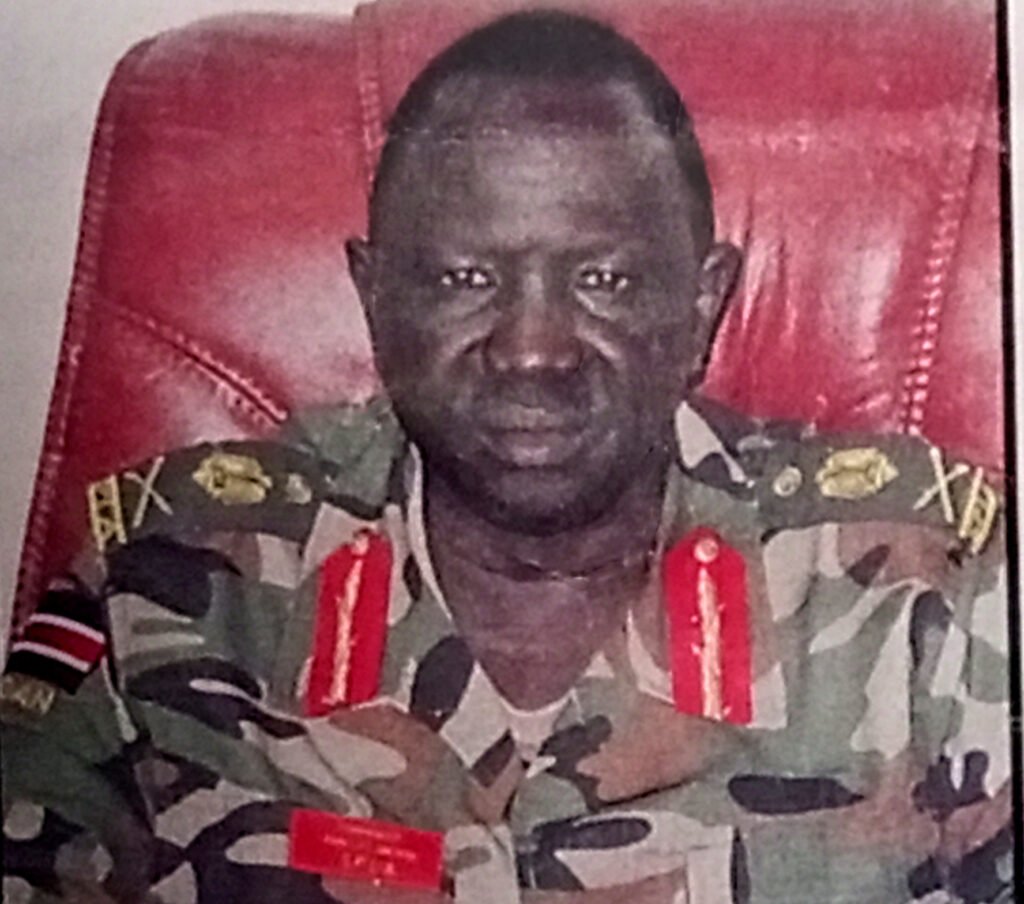
Major General John Lat Makoi Zechariah was born 25 January 1962 in Amethduol In Abiriu, has father is Zachariah Makoi Ater Malual from Pajul clan of the Pathoing sections the Gok Dinka , his mother called Elizabeth Nyidhal Anyap Dhal Marol ,from Nyang Marol Adut , clan of the pagok section of the Dinka Gok.
it worthy to note here that the maternal grandfather of Major General John Late Zachariah was a direct son of the first woman Paramount chief in the entire Dinka History , chief Anak Mathiang Luac of Gok Dinka,
In 1972-1975 Major General John Lat did his elementary schooling at Abiriu primary school.
1975- 1978 major General John Lat Makoi went to Madrasa Madina (currently is Ager Gum primary School).
1978-1981 General Lat went to Riek Dor Intermediate school where the excelled.
1981-1983 Major General John Lat Zachariah Makoi went to Rumbek Secondary school at the same time he was work as a Nurse /paramedic.
Major General John Lat Zacharia was also the head /leader of the clandestine /secret students’ cell agitating for anti-government of south activities.
The student group under the leadership of Late John Lat mobilized masses and in liaison with south Sudanese soldiers based in Malou Military barrack in Rumbek in particular, among non-commissioned officers (NCOs), created a fertile ground for rebellion against president Nimeiri’s May Regime in the then Lakes province in General and Rumbek in particular, in fact was detains with some of his colleague among them Mayek Makuenaliier , Mabor Meen Wol , only to be released by a patriotic south Sudanese security personnel in the army .
Education and Academic Qualifications
While he had been much focused on and busy fighting for the liberation of his motherland and people .Major General John Lat Zachariah Makoi who was a naturally gifted brilliant person, did not lose sight of his individual self-development in the field of lose sight of education as he strongly believed in the power of knowledge and education achievement. Hence, he enrolled on distance learning at ford Hare University based in the republic of South Africa from the year 2000 t0 2004 when he obtained Bachelor of Arts (AB) in Public Administration & governance
In 2015 he achieved another millstone through furthering his knowledge and achievement by completing and obtaining a master’s Degree in conflict resolution management at the same University of Ford Hare , south Africa .
He had in fact enrolled and was about to start his Doctorate in Philosophy (PhD), unfortunately this was never meant to be, as he painfully let us so soon!
Military and politics
In July 1983 Major General John Lat Zachariah Makoi officially joined the Sudan people’s Liberation Army and Sudan people’s liberation movement (SPLA/M), to fight and determined the struggle for the cause of our mother Land its appressed people, he was taken for special military intelligence training in Addis Ababa the capital city of Ethiopia .
General Makoi was graduated with the Tumsah Battalion of what was knowing as “Moonlight “ battalion of Tiger , Jamus & Tumsah which were beside the 105 and 104 battalions that initiated the rebellion in Bor and Ayod town of the then Jonglei province , respectively . These battalions formed the nucleus of the liberation army (SPLA).
After Graduation, major general John Lat Zachariah Makoi was retained as a military instructor at the training center camp at Bona for about nine months after which he was later on deployed around Jekou as a non- commissioned (sergeant) Military intelligence personnel .
In 1986 Seargent John Lat Zakharia Makoi was recalled back to attend cadet course with shield two where he successfully completed the course and and was commissioned second lieutenant in the SPLA.
19886 Late John Lat Zachariah Makoi was deployed with the Nile Battalion Mour-Mour Division of the SPLA. Trekking for months through greater Nasir/Latjor area and across the Nile into western Upper Nile (now a day Unity state).
Major general John lat Zachariah Makoi and his colleagues in the Nile Battalion finally arrived at their intended final deployment area around Gogrial /Abyei in greater Bahr el Ghazal Region.
The late General John was a freedom fighter remained deployed in the area of Gogrial, Abyei, Wau, Aweil, etc. cetera within the greater Bahr el Ghazal region. Diligent doing his assignment as the MI personnel and frequently moving back and forth within the vast region as part of the sometimes mobile zonal command headquarters under the overall command of commander Daniel Awet Akot , the then SPLA commander of Northern Bahr el Ghazal who later on became the overall Zonal commander and key member of the SPLM/A politico-military High command .
In 1986 -1995 General John Lat Zachariah Makoi remained deployed and bravely fought numerous Battles against the enemy forces within the wider Ba el Ghazal region.
1995 the General Lat who was then an alternate commander went to Maridi in western Equatoria, after the initial transfer to Nuba Mountains was decided again and cancelled by the SPLA leadership. He attended the Moya Sukun refreshing course /workshop from where he was assigned chief military intelligence in charge of western Equatoria and he shuttled between Maridi, Yambio and other towns under SPLA Controlled areas within the region.
1997 MAJOR General John Lat Zachariah was assigned as military intelligence officer in charge of the operation Deng Nhial (ODN) campaign which uprooted all the Sudan Armed Forces’ military garrisons in the former greater Lakes and Tonj area.
Major General John continued as the chief military intelligence office for Bahr el Ghazal regional command until 2001.
In 2001 Major General .John Lat Zachariah Makoi was appointed county commissioner of Cueibet County and his appointment as the county commissioner came in the wake of untimely death of his predecessor, Late Zachariah Mathen Riak Kuar .
John Lat Zachariah Makoi held the post until 2005 when he became the first SPLM appointed Governor of former Lakes state.
2005-2006 Governor of Lakes State.
2007 John returned to active military service with the rank of a Brigadier General and appointed Deputy Director General of Military intelligence based at SPLA General Headquarters, Bilpam.
2009 the Major General and Appointed the chief/Director General of Military intelligence at the SPLA General Headquarters, Bilpam, He held the position until 2012.
2012 to 2015 He was transferred to the position of Director General for Military logistic & procurements.
Social Back ground
Major General Johan Lat Zachariah Makoi had seven (7) wives of his own plus in accordance with Dinka culture, four (4) wives for late brothers and an uncle.He had a total of 25 children among them 14 boys and 11 girls.
4- Ager Gum Akhol
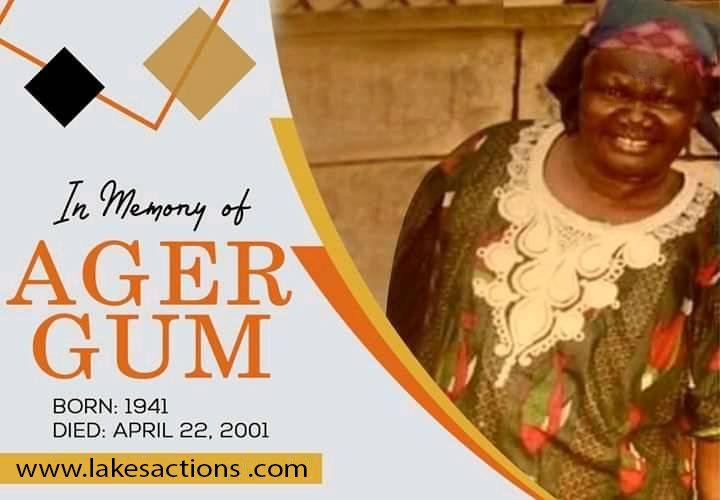
Commander Ager Gum Akhol from Dinka Aqar of Rumbek, born in 1941 . She served in Ananya one. She was also served as an officer in the Sudanese army forces (SAF). She defended traditional bases and fought for the liberation of South Sudan.
Commander Aqer Gum joined Ananya one in 1964. She was absorbed into prison after the Addis Ababa Agreement of 1972.
Commander Ager Gum joined the Sudan Liberation Army in 1984 and was promoted to the rank of officer.
Commander Ager Gum her responsibility was to coordinate with the female component, who were intelligence officers collecting information and smuggling weapons from the city to the front lines. And she was composing freedom songs.
Mrs. Aqir Gum Akhol was a supporter of girls’ education and did not go to school.
Aqer Gum died in 2001-2002 in Rumbek and a mixed school in Rumbek Central was named Aqer Gum as a memorial to her.